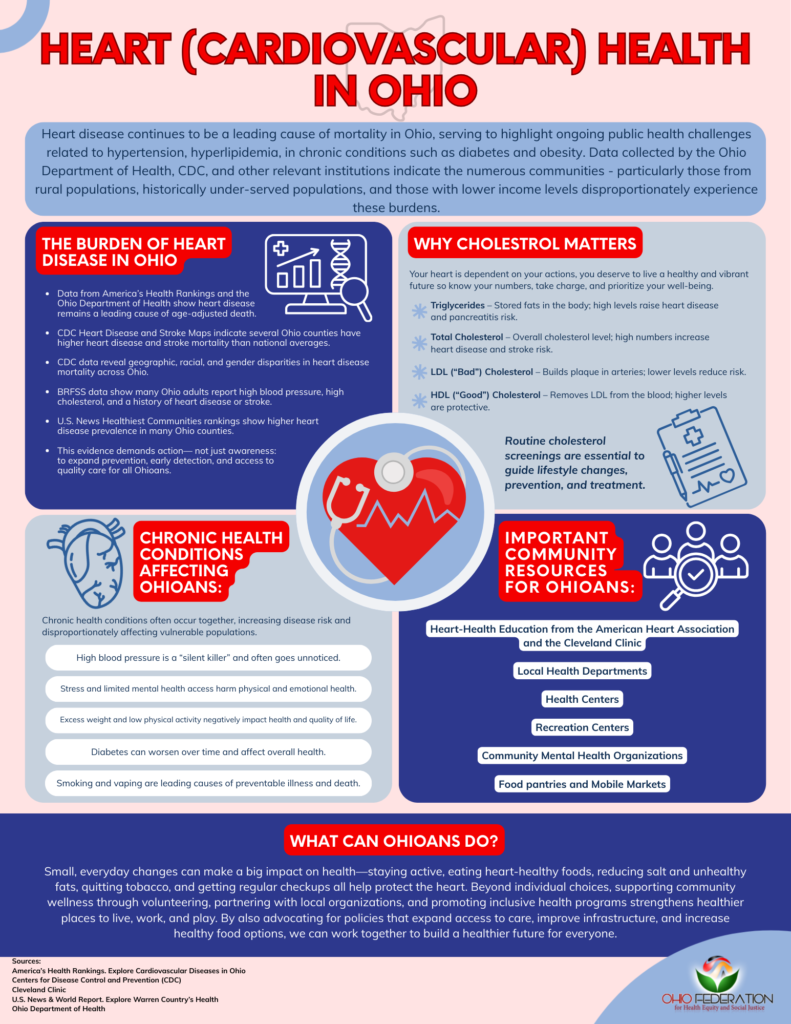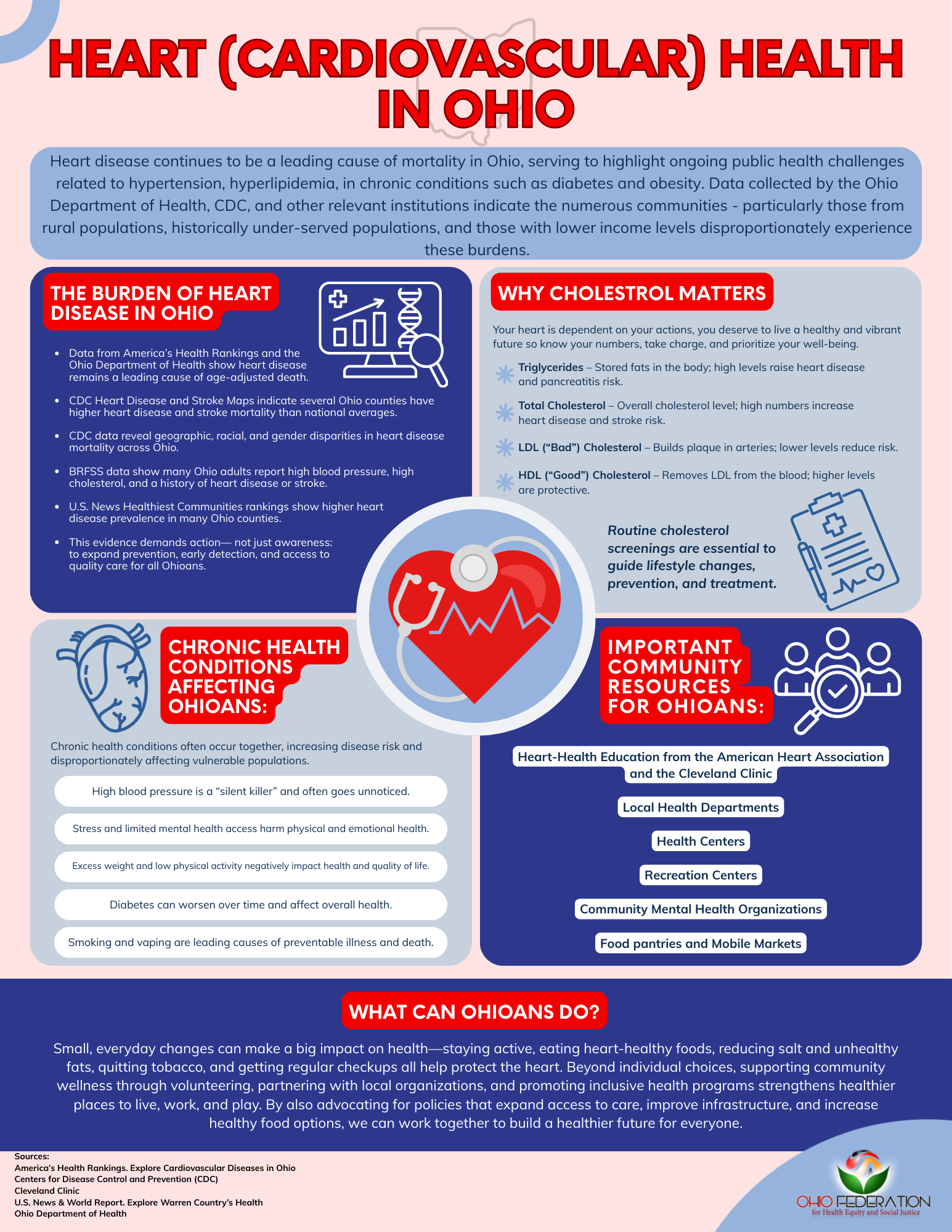
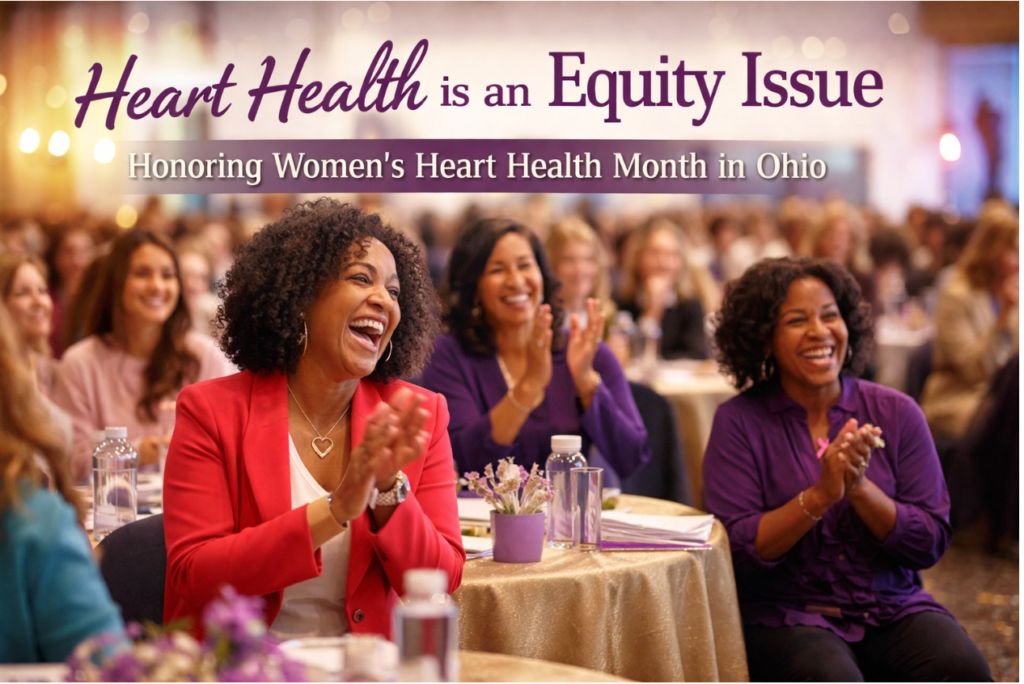
February marks American Heart Month: a time when we wear red, share statistics, and remind each other to “take care of our hearts.” But here’s the uncomfortable truth we need to sit with: heart health is not an equal playing field. For women: especially Black, Hispanic, and other minority women in Ohio: cardiovascular disease isn’t just a health issue. It’s an equity issue.
Cardiovascular disease (CVD) is the No. 1 killer of women in the United States. Nearly half of all women over age 20 are living with some form of CVD. Yet only about half of women are even aware of this threat.
That gap between reality and awareness? That’s where inequity thrives.
The Numbers Don’t Lie: But They’ve Been Ignored
For decades, women have been historically excluded from cardiovascular research, clinical trials, treatment protocols, and funding decisions. The result? A healthcare system that often fails to recognize, diagnose, and treat heart disease in women the same way it does in men.
And when we layer in race and socioeconomic factors, the disparities become even more glaring.
Consider these facts:
- Black women are more likely to die from heart disease than white women: and often at younger ages
- Hispanic and Latina women face higher rates of risk factors like diabetes and obesity, yet are less likely to receive preventive care
- Women in rural Ohio communities often lack access to cardiologists, screenings, and timely emergency care
- Income and insurance status directly impact who gets diagnosed early: and who doesn’t get diagnosed at all
This isn’t about individual choices. This is about systems that weren’t designed with all women in mind.
Why Women’s Hearts Are Different: And Why That Matters
Here’s something that doesn’t get talked about enough: women’s hearts are biologically different from men’s hearts. And women experience unique life stages that significantly increase their cardiovascular risk.
Pregnancy complications like preeclampsia, gestational diabetes, and preterm delivery are now recognized as early warning signs for future heart disease. Yet many women are never told this after leaving the hospital with their new baby.
Menopause brings hormonal shifts that can increase blood pressure, cholesterol, and overall cardiovascular risk. But how many women receive proactive cardiac screenings during this transition?
Autoimmune conditions: which disproportionately affect women: are linked to higher rates of heart disease. Lupus, rheumatoid arthritis, and other inflammatory conditions put women at elevated risk, yet this connection is often overlooked.
When healthcare systems don’t account for these differences, women fall through the cracks. And when those women are already facing barriers due to race, income, geography, or language: the cracks become chasms.
What Health Equity Really Means for Heart Health
Health equity isn’t about giving everyone the same thing. It’s about giving everyone what they need to achieve optimal health outcomes.
For women’s heart health in Ohio, that means:
✔️ Culturally competent care that respects and understands the lived experiences of diverse communities
✔️ Accessible screenings in underserved neighborhoods: not just in suburban medical centers
✔️ Education in multiple languages so every woman understands her risk factors and warning signs
✔️ Trust-building between healthcare providers and communities that have historically been harmed or ignored by the medical system
✔️ Policy advocacy that addresses the root causes of health disparities: housing, food access, environmental justice, and economic opportunity
Know the Warning Signs: They’re Different for Women
One of the most dangerous myths about heart attacks is that they always look like what we see in movies: a man clutching his chest and collapsing. For women, heart attack symptoms are often subtler and easier to dismiss.
Women experiencing a heart attack may feel:
- Shortness of breath without chest pain
- Nausea, vomiting, or indigestion
- Pain in the jaw, neck, back, or arms
- Unusual fatigue that comes on suddenly
- Dizziness or lightheadedness
- Cold sweats
Too many women: and too many healthcare providers: mistake these symptoms for stress, anxiety, or “just getting older.” This leads to delayed treatment, worse outcomes, and preventable deaths.
If something feels wrong, advocate for yourself. Ask for an EKG. Request cardiac enzyme tests. Don’t let anyone dismiss your concerns.
Prevention Starts with Awareness: And Action
The good news? Up to 80% of cardiovascular disease is preventable through lifestyle changes and early intervention. Here’s what every woman can do to protect her heart:
🩺 Get Your Numbers Checked
Know your blood pressure, cholesterol, blood sugar, and BMI. These numbers tell a story: make sure you’re reading it.
🥗 Eat for Your Heart
Focus on whole foods, lean proteins, healthy fats, and plenty of fruits and vegetables. Limit processed foods, sodium, and added sugars.
🚶♀️ Move Your Body
Aim for at least 150 minutes of moderate physical activity per week. Walking counts. Dancing counts. Gardening counts. Just move.
🚭 Quit Smoking
Smoking dramatically increases your risk of heart disease. If you need help quitting, reach out to Ohio’s Quit Line at 1-800-QUIT-NOW.
😴 Prioritize Sleep and Stress Management
Chronic stress and poor sleep are silent contributors to heart disease. Find what helps you decompress: and protect that time fiercely.
🗣️ Talk to Your Doctor About Your Full History
Share your pregnancy history, family history, and any autoimmune conditions. Advocate for comprehensive cardiac assessments, especially during perimenopause and menopause.
Ohio Is Taking Action: Join the Movement
Across the state, organizations and communities are coming together to raise awareness and fight for heart health equity. The American Heart Association’s Go Red for Women campaign has been leading this charge for over 20 years: connecting, educating, and empowering women to take control of their cardiovascular health.
This February, Ohio is hosting powerful events to honor Women’s Heart Health Month:
- Columbus Go Red for Women
- Date & Time: Thursday, February 12, 2026, from 10:30 AM to 1:30 PM.
- Venue: Hilton Columbus Downtown, 402 N High Street, Columbus, OH.
- Description: Includes an Interactive Wellness Experience followed by a formal luncheon.
- Link: Register for Columbus Go Red.
- Toledo Go Red for Women
- Date & Time: Thursday, February 12, 2026, at 11:00 AM.
- Venue: Glass City Center, Toledo, OH.
- Link: Register for Toledo Go Red.
- Akron-Canton Go Red for Women
- Date & Time: Thursday, February 12, 2026, at 11:00 AM.
- Venue: House Three Thirty, Akron, OH.
- Link: Register for Akron-Canton Go Red.
- Dayton Go Red for Women
- Date & Time: Thursday, February 19, 2026, from 11:00 AM to 1:00 PM.
- Venue: Marriott at the University of Dayton, 1414 S Patterson Blvd, Dayton, OH.
- Link: Register for Dayton Go Red.
- Greater Cleveland Go Red for Women
- Date & Time: Friday, February 27, 2026, from 10:00 AM to 1:30 PM.
- Venue: Hilton Cleveland Downtown, Cleveland, OH.
- Link: Register for Cleveland Go Red.
These aren’t just events: they’re opportunities to learn, connect, and commit to change.
A Call to Action: Advocate for Equity
Awareness is important. But awareness without action doesn’t save lives.
Here’s how you can make a difference this Heart Health Month:
- Schedule a screening: for yourself, your mother, your sister, your friend
- Share this information with your community, your church, your workplace
- Support organizations working on health equity in Ohio
- Demand better from healthcare systems: culturally competent care, accessible services, and accountability for disparities
- Use your voice to advocate for policies that address the social determinants of health
Heart disease doesn’t have to be the leading killer of women. But changing that reality requires us to confront the inequities head-on: and fight for a future where every woman, regardless of her zip code, her income, or her skin color, has the opportunity to live a long, heart-healthy life.
The Ohio Federation for Health Equity and Social Justice is committed to advancing health equity across our state. This February, we honor Women’s Heart Health Month by amplifying the voices and needs of all Ohio women: especially those who have been underserved and overlooked for too long.
Your heart matters. Your health matters. You matter.
❤️ Wear red. Get screened. Speak up. Take action.